
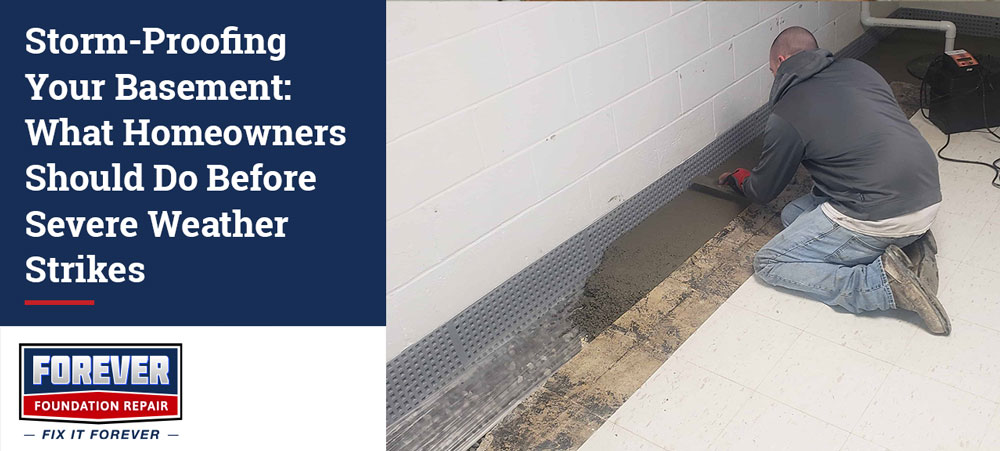
Weather patterns throughout Northwest Ohio and Northeast Indiana create substantial flooding risks for basements. Heavy precipitation paired with seasonal temperature swings produces perfect conditions for water penetration. The clay-rich soil common to our area makes these problems worse—it holds moisture and pushes it straight toward your foundation.
Addressing water damage requires considerable expense and effort. Forever Foundation Repair understands the burden this places on families.
You don’t have to wait helplessly for the next storm. This guide offers practical direction for safeguarding your property before severe weather strikes. We’ll cover essential warning signs, protective steps you can take right away, and when professional basement waterproofing services from Forever Foundation Repair become essential.
Safeguard your property through advance preparation—delaying until storms arrive endangers your home and family.
Safety First: Never enter a flooded basement without verifying electrical power is shut off. Even shallow water creates serious electrocution dangers. Water contacts outlets, appliances, or extension cords without visible indicators. Gas-powered devices exposed to flooding need professional inspection—damaged components create serious gas leak risks.
Warning Signs Your Basement Faces Flooding Danger
Catching problems early prevents flooding disasters before they happen. Research shows the reality: 60% of homes across America face basement moisture problems.
Moisture on Walls, Flaking Paint, or Damp Flooring
Peeling or bubbling paint indicates water intrusion. Moisture seeps through foundation walls, creating pressure that forces paint from surfaces.
Floor coverings feel wet or smell musty without clear water sources. Moisture migrates upward through concrete slabs, creating ideal conditions for mold growth.
Musty Smells, Mold Development, and Compromised Air Quality
That characteristic basement smell means mold releasing particles into your home’s atmosphere. Here’s what matters most: dampness and mold cause coughing, breathing difficulties, and respiratory problems. Mold contact triggers asthma attacks. When symptoms improve after leaving your house, your basement is the culprit.
Foundation Gaps That Allow Water Entry
Foundation gaps allow water infiltration while signaling structural damage. Poor drainage creates pressure pushing water through openings. Horizontal gaps indicate severe wall damage. Vertical gaps signal foundation movement. Stair-step patterns need immediate professional review. Long horizontal gaps warrant inspection even without active leaking.
Pooled Water Around Walls or Floor Drains
Water pooling near drains means blockages exist. Water backing up shows system failures. Puddles on floors result from drainage problems or foundation openings. Mold develops within 24-48 hours in wet environments.
Never ignore warning signs. Quick response prevents expensive emergency work.
Preventative Steps Homeowners Can Take Before Severe Weather
Take protective action now to protect your basement before storms develop.
Improve Exterior Drainage Around Your Foundation
Start at ground level—your first line of defense. Ground must slope away from foundation walls. You need 6 inches of drop over 10 feet of distance.
Check your property following rainstorms. See standing water? Those spots require immediate attention. Install compacted soil to create slopes that direct water away from your foundation. Northwest Ohio and Northeast Indiana clay soil holds moisture significantly longer, making proper grading absolutely essential for your home’s protection.
Your gutter system handles thousands of gallons during major storm events. Clean them twice each year—debris buildup causes overflow that dumps water directly against your foundation. Check seam connections and where downspouts attach. Here’s what you must remember: water must discharge 5-6 feet minimum from your foundation walls. Without adequate extensions, all that rooftop runoff flows straight toward your basement.
Underground downspout systems provide outstanding performance—they move water to safe distances while removing surface-level tripping hazards from your property.
Seal Foundation Openings and Water Entry Points
Foundation gaps create direct pathways for water to enter your basement. Check corner areas, where pipes penetrate walls, and floor-wall connection points. For active water problems, polyurethane or epoxy injection systems create flexible waterproof barriers. These specialized products bond permanently to concrete and deliver lasting protection.
Fix water intrusion before starting any basement finishing work. Moisture trapped behind finished walls accelerates damage and creates far worse conditions.
Window well areas need regular maintenance. Clear accumulated leaves and debris each season. Clear plastic bubble covers stop rainfall from entering while preserving natural light. Apply fresh caulking around window frames and seal openings where utility lines enter.
Protects Your Foundation’s Structural Integrity
Water damages your foundation from the inside out. Ongoing moisture infiltration weakens structural foundations, creating cracks and destabilizing your home’s entire support structure. Moisture creates hydrostatic pressure that stresses basement walls and floor systems. This pressure causes cracking, wall movement, and structural shifting.
Professional waterproofing systems stop pressure buildup, preserving foundation stability. We seal existing cracks, block water entry points, and reinforce damaged structural areas.
Unaddressed water issues lead to foundation settling, expanding cracks, and material breakdown requiring costly structural repairs. Professional waterproofing stops these problems, saving you from major future repair expenses.
A complete waterproofing system costs less than 1% of your home’s total value but prevents this amount or more in future repair costs over your property’s lifetime.
Enhances Your Home’s Air Quality
Your basement environment affects your entire home’s air quality.
Forever Foundation Repair keeps your Northwest Ohio and Northeast Indiana property protected from foundation to roof, providing complete confidence for your family.
Severe Weather Basement Protection Checklist
When dangerous weather approaches, follow this complete guide to protect your basement and respond correctly if water enters.
Before Storms Arrive
- Test your sump pump by pouring water into the pit.
- Inspect your basement thoroughly, looking for cracks, moisture signs, and debris.
- Clean gutters and confirm downspouts direct water 4-6 feet from foundation.
- Seal foundation cracks using hydraulic cement.
- Move valuables upstairs and unplug basement electronics.
- Keep emergency supplies in waterproof containers.
- Post emergency contacts, including Forever Foundation Repair.
After the Storm Passes
- Shut off electricity and gas before entering any flooded basement areas.
- Document all damage with detailed photographs for insurance claims.
- Remove standing water immediately using pumps or wet vacuums.
- Run dehumidifiers continuously until moisture levels normalize.
- Clean and sanitize all water-contacted surfaces thoroughly.
- Contact Forever Foundation Repair for foundation damage evaluation or mold prevention concerns.
Your family’s safety comes first—wait for professional help when conditions appear dangerous.
Our certified foundation specialists assess your foundation’s condition, drainage systems, and sump pump operation to locate water entry points and create permanent waterproofing solutions. We identify hidden problems before flooding damages your home, preventing mold growth and protecting your foundation’s structural integrity.
Contact Forever Foundation Repair today at (419) 287-6932 for your complimentary foundation inspection.