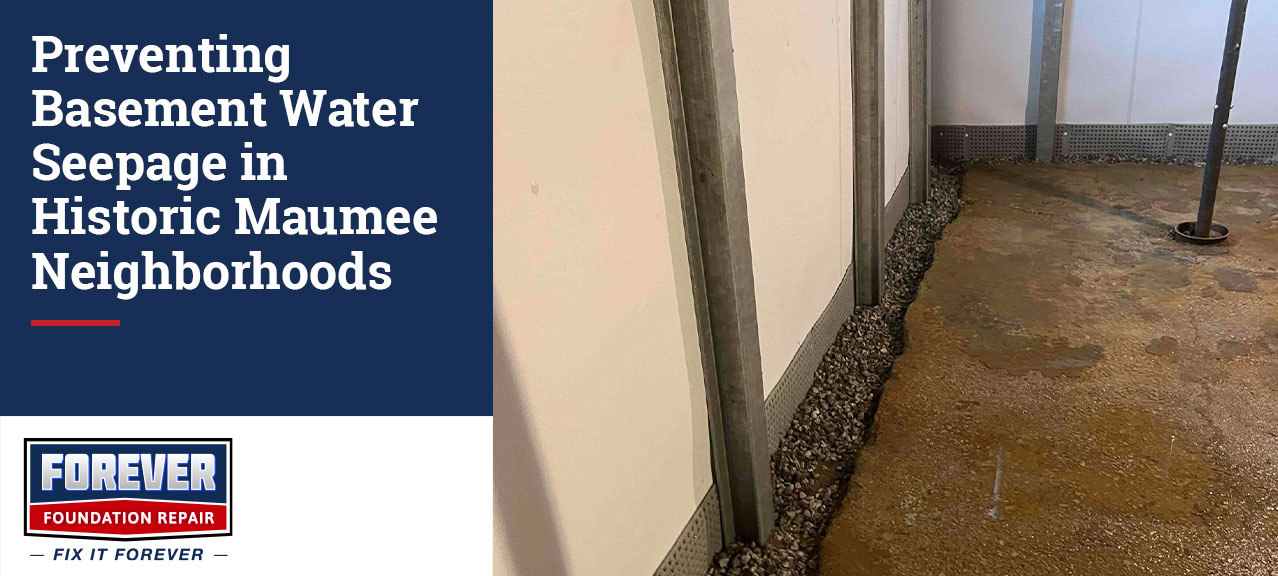
Historic Maumee homes come with a lot of character—and a foundation built long before modern waterproofing existed. The high water table, dense clay soil, and riverside terrain that define this community also create the conditions for basement water seepage Maumee homeowners deal with year after year. When heavy rain saturates that clay soil, water pressure builds against your foundation walls and pushes through every weak point it can find.
For historic home foundation repair in Maumee, the starting point is always the original construction. Greek Revival and Victorian homes throughout the Maumee Historic District and Maumee Uptown Historic District typically rest on stone, rubble, or fieldstone foundations—materials that were never designed to block water the way modern poured concrete does. Old home basement waterproofing in Maumee Ohio has to account for that. These century-old foundations need interior drainage solutions matched to their original materials, not the same generic fixes that work on a 1990s build.
Why Historic Maumee Homes Seep Differently
Basement water seepage in Maumee isn’t just a weather problem—it’s a construction problem. The stone, fieldstone, and rubble foundations that support most of Maumee’s oldest homes were never meant to keep water out the way modern poured concrete does. Decades of clay soil shifting around them have only widened the gaps.
Maumee’s historic districts: Greek Revival and Victorian homes built before modern waterproofing
The Maumee Historic District, listed in 1974, covers the area between W. Harrison, W. Broadway, Cass, Allen, and W. Dudley streets. The Maumee Uptown Historic District, added in 1984, centers on Conant, Wayne, and Dudley Streets. Homes across both districts date to the early 1800s, with Greek Revival and Late Victorian architecture making up much of the streetscape. These foundations predate damp-proofing membranes, drainage boards, and sump systems entirely. That’s why historic home foundation repair in Maumee is a different job than repairing a house built in the 1980s.
How stone, fieldstone, and rubble foundations rely on lime mortar
Rubble foundations stack flat, irregular stones—sometimes without any binding agent at all. Fieldstone foundations use lime-based mortar to hold similarly shaped stones together. That lime mortar is designed to be a sacrificial layer, letting the wall breathe and slowly release moisture rather than trap it. Many of these foundations were also built without a formal footing—just stones set directly into a trench—so soil movement underneath causes settlement that shows up as cracked plaster or sticking doors on the floors above. Over time, the mortar breaks down into a powdery, brittle state, leaving small gaps between stones where groundwater works its way through.
How Lucas County’s clay soil, rainfall, and freeze-thaw cycles wear down older foundations
Lucas County sits on glacial till—a dense mix of clay, silt, and sand that swells when wet and pulls away from foundation walls as it dries out. Maumee’s location along the river makes this worse. A high water table, heavy clay soil, and flat terrain give storm runoff nowhere to go except directly against your foundation walls. Winter freeze-thaw cycles add to the damage: water trapped in mortar joints expands as it freezes and leaves a void once it thaws, creating a slow, steady cycle of pressure, settlement, and widening cracks that compounds year after year.
Common Seepage Points and Warning Signs in Historic Foundations
A dry basement that suddenly starts showing moisture isn’t a mystery—it’s a failure point. The timing and location of new basement seepage almost always tell you exactly what’s going wrong, and knowing where to look keeps you from chasing a foundation crack repair a historic home might not even need.
Why a basement starts leaking after years without problems
That sudden change after years of dry conditions usually points to one culprit: a failed French drain or drain tile buried beneath the footing. These pipes collect groundwater and move it toward a sump pump, but mud and silt clog them over time. Once that drainage fails, the soil around your foundation stays saturated, pressure builds against the walls, and water finds its way inside.
Water entry through worn mortar joints and old foundation repairs
Stone walls don’t fail at one neat spot the way poured concrete does. Gaps in the mortar joints let water enter from any point below grade. Run a screwdriver across the mortar—if it crumbles out easily, repointing is overdue. Even previous repairs like epoxy injections at wall cracks can stop working over time, because the stone around them keeps shifting.
Leaks where later additions meet the original foundation
The seam between an addition’s newer foundation and the original stonework is one of the most common trouble spots in a historic home. Old and new sections settle at different rates, which keeps reopening those joints even after injection repairs. Water can also enter above the foundation line—at the band joist or sill plate—when an exterior seal fails. Basement waterproofing alone won’t fix that.
Failed exterior drains and poorly drained window wells
Window wells rely on a gravel base that drains into the perimeter drain system, but leaves and sediment clog that gravel over time, letting water pool against the frame. A missing well cover or yard grading that slopes toward the house pushes even more storm runoff into the problem during heavy rain.
Damp stone, white deposits, musty smells, and water trails after rain
Wet basement? Watch for efflorescence—the white, powdery residue water leaves behind as it moves through stone. Musty odors, elevated humidity, and dark staining along the cove joint after a rainstorm all point to the same thing: water is getting in.
Seepage vs. condensation: how location and weather help tell them apart
Seepage follows heavy rain and usually comes with efflorescence. Condensation shows up more in summer, coating pipes and windows without any mineral residue. Tape a piece of foil to the wall and check it after 24 to 48 hours—moisture on the room-facing side means condensation, while moisture on the wall-facing side confirms seepage.
Preventing Seepage Without Damaging Original Foundation Materials
Fixing basement water seepage in Maumee historic homes isn’t just about stopping water—it’s about stopping it without damaging the century-old materials your house depends on. The right repair approach for a stone or rubble foundation looks very different from what works on a modern poured concrete wall.
Start with gutters, downspouts, and grading to reduce water near the house
Clean gutters, downspouts extended four to six feet from your foundation, and grading that drops six inches over the first ten feet prevent nearly 95 to 99% of basement water intrusion. A single roof sheds over 12,000 gallons each season. Getting that water away from your foundation walls is the single most effective first step.
Repoint worn joints with mortar suited to the original stonework
Crumbling mortar needs to be replaced with lime-based mortar—not Portland cement. Lime mortar stays softer than the stone itself, which lets the wall breathe and move without cracking. Portland cement is too rigid for historic stonework and will cause more damage over time.
Use interior drainage designed for stone and rubble foundations
Interior drainage systems built specifically for rubble and fieldstone foundations channel groundwater away without disturbing the original stonework. Water gets directed into a below-floor collection system rather than finding its own path through your walls.
Connect drainage to a sump pump with backup protection and safe discharge
That drainage system is only as reliable as the sump pump it connects to. Sump pumps fail without warning, typically within 5 to 7 years, so battery backup protection is essential. Backup units can move 800 to 2,000 gallons per hour, keeping your basement dry even when the power goes out.
Compare exterior excavation risks and check local historic review requirements
Exterior excavation near rubble foundations carries real risk—these old footings depend on undisturbed soil for stability, and digging around them can cause the settlement you’re trying to prevent. Maumee’s historic district also requires a Certificate of Appropriateness before any exterior work begins, so that review process needs to happen before any excavation plan moves forward.
What a Historic Home Basement Assessment Should Cover
A century-old home deserves more than a generic checklist. The right assessment starts with understanding exactly what you’re working with—foundation materials, moisture sources, and the history of any past repairs. Here’s what Forever Foundation Repair evaluates during a historic home foundation repair Maumee assessment:
Identify foundation materials, active leaks, and moisture sources Our technicians document wall alignment, cracking patterns, water staining, and efflorescence, then trace whether moisture comes from groundwater, drainage failure, or condensation. Knowing the source matters before any repair plan gets written.
Check prior repairs and decide whether wall movement needs further review Old bulges that stopped moving decades ago are very different from active displacement. Horizontal movement at mid-height, driven by soil pressure, signals a lateral-load problem that needs engineering review before any cosmetic fix. Loss of bearing under a sill or beam gets flagged the same way.
Plan repairs and humidity control before finishing the basement Taping plastic sheeting to the wall for two weeks reveals whether condensation or seepage is driving your dampness, which determines whether you need sealing or dehumidifying. Sump pump backup protection and discharge lines also get checked before any finishing work begins.
Talk to Forever Foundation Repair about your Maumee basement We walk Maumee homeowners through every finding in plain terms—no technical jargon, no pressure. Our team maps out repair options that respect your home’s original foundation drainage patterns and historic home renovation waterproofing needs. Contact us today for a no obligation, custom inspection and repair quote.
Conclusion
Basement water seepage Maumee homeowners face is rooted in foundation age, soil, and water pressure working against century-old stone and rubble walls. Your home’s foundation wasn’t built for modern drainage demands, and protecting it means working with its original materials, not around them. Forever Foundation Repair understands that history. We evaluate your Maumee basement with the attention a historic home deserves, and we walk you through repair options that keep your foundation sound for decades to come.
Contact us today for a no obligation, custom inspection and repair quote.