Sandusky homeowners deal with one of the more punishing foundation threats in Northern Ohio every winter. Water expands roughly 9% when it freezes, and that force can repeat dozens of times before spring arrives, turning hairline cracks into serious structural problems. Erie County’s clay soil holds moisture far longer than sandy or loamy ground, which means the soil pressing against hollow block foundation walls stays saturated well into the cold months. The result is a cycle of pressure, cracking, and water intrusion that gets worse each season if left unaddressed.
Bowing walls, crumbling mortar, and water seeping into the basement are the most common signs Sandusky Ohio foundation repair specialists see after a hard winter. This guide covers how freeze-thaw damage develops in concrete block foundations, the warning signs worth tracking, and the repair options—carbon fiber reinforcement, helical piers, and basement waterproofing—that protect your home from Erie County’s wet winters.
Why Freeze-Thaw Cycles Damage Sandusky Block Foundations
How wet soil and repeated freezing stress block walls
Wet soil around a Sandusky foundation doesn’t just sit there during winter. When that saturated ground freezes, it expands and pushes hard against block walls. Temperatures climb, the ice melts, the soil pulls back—and the next freeze fills that space with fresh pressure all over again. Run that pattern through an entire Northern Ohio winter, and the wall absorbs dozens of these push-and-release cycles. The result is widening cracks, crumbling mortar, and eventually a wall that starts to bow.
Hollow block construction in older Northern Ohio homes
Many mid-20th century homes across our service area were built with hollow concrete block rather than poured concrete walls. Those open cores inside each block were never meant to hold standing water. Once mortar wears thin, moisture works its way inside, collects in those cores, and has nowhere to go. That trapped water freezes, expands, and cracks the block from the inside out. Each surface crack that forms lets in more water the following season, so the damage doesn’t stay contained—it builds on itself.
Why mortar joints fail under repeated pressure
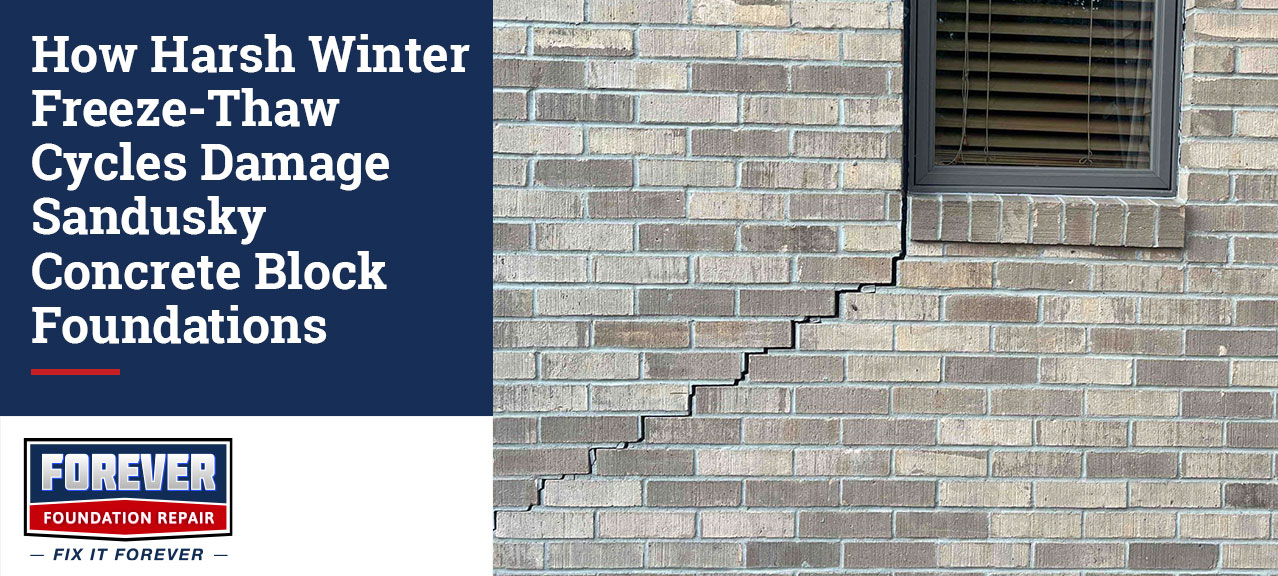
Mortar absorbs moisture more readily than the block itself does. The pores inside mortar trap water, and when temperatures drop below freezing, that trapped moisture expands and breaks the pore structure apart from within. The mortar loses its grip, joints crumble or disappear in sections, and the wall ends up relying on individual blocks alone to hold back soil pressure. This is when stair-step cracking starts to show up clearly along the mortar lines.
How frost heave affects foundation walls
Frost heave happens when water in saturated soil freezes and expands with enough force to lift and shift an entire foundation wall. That force can reach thousands of pounds pressing against your basement wall. When the ice thaws, soil settles back into a slightly different position than before. Every cycle through a Sandusky winter shifts things a little further, and those small movements accumulate into visible structural damage.
How Erie County clay soil makes things worse
Clay particles can swell up to 15% in volume when wet, and that swelling intensifies once the moisture inside the clay freezes. Rain or snowmelt saturates the ground around your foundation, a hard freeze locks that moisture in place and expands it, and the pressure that builds against the block wall has nowhere to go except inward. Clay soil doesn’t drain the way sandy or loamy ground does, so this cycle keeps repeating long after other soil types would have dried out.
Winter frost pressure versus water pressure
Water pressure alone—saturated soil pushing steadily against a wall after heavy rain or snowmelt—is enough to cause problems. Winter adds a second force on top of that. Ice formation inside the soil creates a mechanical wedging effect, pushing against the wall not just with water weight but with the physical expansion of freezing. Both forces hit at the same time during cold months, which is exactly why bowing and cracked block walls are some of the most common issues our Sandusky Ohio foundation repair team sees heading into winter.
Signs of Freeze-Thaw Damage in a Block Foundation
A Sandusky block wall doesn’t hide the damage quietly. Once freeze-thaw pressure starts taking a toll, the signs show up in the cracks, gaps, and surface changes that give you a reliable read on how much the wall has already moved.
Horizontal and stair-step cracks along mortar joints are the first thing to look for. Horizontal cracks running across the face of a block wall usually mean soil pressure is pushing in from outside, while stair-step cracks that follow the mortar joints point to uneven settlement or moisture working its way around the foundation. A crack wide enough to slip a quarter edge-on has moved past cosmetic and into territory that warrants a professional assessment.
Crumbling mortar and flaking block surfaces are another clear indicator. Water seeps into the block’s pores, freezes, expands, and breaks the surface apart from the inside—a process called spalling. Tap a block and listen. A hollow or echoing sound, combined with mortar that crumbles under light pressure, tells you the damage has reached the material itself.
Cracks that widen from one season to the next signal that the movement is still active, not old and stable. A hairline crack in the fall can open to a few millimeters wide by the time winter breaks. Photographing cracks each season gives you a clear record of whether things are getting worse.
Gaps where the basement wall meets the floor develop as the wall shifts under repeated pressure. Watch for growing separation between the foundation and the floor joists above as well.
Bowing or inward lean is the most urgent sign. Once a wall bows past two inches, carbon fiber straps alone are typically not enough to address the movement, and the repair shifts toward wall anchors or heavier structural support.
Repairing Freeze-Thaw Damage in Block Foundations
Patching a bowing wall or filling cracks with hydraulic cement won’t address what’s driving the damage. At Forever Foundation Repair, we match the repair method to how far the wall has already moved and what’s pushing against it.
Carbon fiber reinforcement works best when bowing stays under two inches and the wall hasn’t started sliding at the base. High-tensile carbon fiber straps bond directly to the block surface with structural epoxy, restoring tensile strength the wall lost to years of freeze-thaw pressure. The install happens from inside the basement without any excavation, though it holds the wall in its current position rather than pulling it back to plumb.
Wall anchors or steel I-beam supports become the right call once movement passes that two-inch mark. Steel plates anchor into stable soil outside the home, connected through the wall by a galvanized rod that can be gradually tightened to draw the wall back over time. Where yard access is limited, steel I-beams transfer the load into the floor system and footing instead.
Helical piers address situations where the foundation is both bowing and settling. Piers are driven down to load-bearing soil beneath the footing, and hydraulic jacks lift and stabilize the affected sections before the piers are locked in place.
Basement waterproofing and drainage correction complete the repair. Regrading, downspout extensions, and interior drainage systems lower the water pressure building against the wall each winter—protecting whatever structural repair has been installed and keeping it working long-term.
Protecting Your Sandusky Block Foundation Before Winter
The best time to address freeze-thaw damage is before Erie County’s first hard freeze, not after cracks have already widened through another winter.
Seal existing cracks before temperatures drop. Minor exterior cracks give winter moisture a direct path into the block’s pores. Sealing them before freeze events cuts off the entry point that drives frost heave pressure from the inside out.
Fix grading and extend downspouts away from the foundation. Downspouts should carry water at least 5 feet from your foundation—farther on clay-heavy lots—to reduce the hydrostatic pressure that Erie County soil builds up through the cold months.
Install interior drainage and a sump pump. Keeping groundwater below floor level protects both your structural repairs and your living space, with discharge routed well away from the foundation wall rather than back alongside it.
Photograph cracks every spring and track any changes. Cracks that widen after successive winters signal active movement, and that documentation helps our team identify how much the wall has shifted when you schedule an inspection.
Schedule a pre-winter structural assessment with Forever Foundation Repair. Sandusky homeowners who catch bowing walls or crumbling mortar early have more repair options available and better long-term outcomes.
FAQs
- Are block walls more vulnerable than poured concrete walls? Yes. Porous cores and mortar joints absorb moisture readily, making hollow block foundations especially susceptible to freeze-thaw pressure.
- Can a damaged block wall be repaired without full replacement? Carbon fiber reinforcement systems and wall anchors stabilize most walls without rebuilding them entirely.
- When does freeze-thaw damage typically show up? Usually after the first hard freeze following a wet fall season.
- What’s the most effective prevention? Seal existing cracks, correct grading, and manage downspouts before winter arrives.
- When does bowing become urgent? Movement past two inches warrants a prompt evaluation—contact us before conditions worsen.
Conclusion
Freeze-thaw damage doesn’t pause between winters—it compounds. Stair-step cracks, bowing walls, and crumbling mortar are Erie County’s way of telling you the pressure has already built up. Catching those signs early means more repair options and better outcomes for your home and family.
Forever Foundation Repair specializes in exactly these problems. Whether your Sandusky block foundation needs carbon fiber reinforcement, helical piers, or basement waterproofing, our team can assess the damage and recommend the right solution before another freeze makes it worse. Contact us today for a no obligation, custom inspection and repair quote.