Most foundation threats announce themselves—water stains on basement walls, visible cracks, bowing concrete. Radon gas does none of that. You cannot see it, smell it, or feel it, yet it forms naturally as uranium decays in soil and rock, causing approximately 21,000 lung cancer deaths every year. As the second leading cause of lung cancer overall and the primary cause among non-smokers, radon requires proactive testing and effective radon mitigation to keep your indoor air safe.
For Northwest Ohio and Northeast Indiana homeowners, this matters more than most. The soil and geology beneath our region create conditions that push radon upward through foundation cracks and unsealed crawl spaces directly into your living space. At Forever Foundation Repair, we know that combining professional radon mitigation with targeted foundation sealing to close off gas entry points is one of the most effective ways to protect your family’s long-term health.
How Radon Seeps Into Your Home Through Your Foundation
Radon does not need a large opening to get inside your home. Pressure differences between your basement and the soil beneath it do most of the work, pulling radon-laden gas upward through any gap it can find. Knowing these entry points is the first step toward closing them off.
Understanding the Stack Effect in Basements
During cold months, your home behaves like a chimney. Warm air rises and escapes through upper levels, which creates negative pressure at the foundation line. That pressure difference acts like a vacuum, drawing soil gas—radon included—upward through any available opening in your basement floor or walls. The effect intensifies in winter when the temperature gap between indoor and outdoor air grows wider. Basements already sit at lower air pressure than the surrounding soil, which makes them especially vulnerable to radon pulling through.
Common Radon Gas Entry Points in Home Foundation
Radon is not selective about how it enters. It uses whatever pathway is available:
- Foundation cracks in concrete slabs, basement floors, and walls
- Construction joints where floors meet walls
- Gaps around pipes and utility penetrations
- Sump pits and unsealed sump pump openings
- Crawl spaces with exposed dirt floors
- Floor-to-wall joints and control joints
- Gaps in suspended floors
Even hairline cracks serve as conduits when pressure differences pull soil gas upward into your home. What looks like a minor cosmetic issue on your basement wall is, in practice, an open channel for radon.
Foundation Cracks and Unsealed Drainage Systems
Foundation cracks weaken your home’s structural integrity and act as open doors for radon at the same time. French drains—designed to redirect water away from your foundation—unintentionally create additional radon pathways. The gravel and perforated pipes inside these drainage systems form porous channels that allow radon to travel freely from soil into the drainage network. Negative air pressure inside your home then pulls radon-laden air from the French drain system directly into your basement. Unsealed sump pits create similar problems, leaving an open connection between soil and indoor air.
Crawl Space and Plumbing Penetration Gaps
A crawl space with an exposed dirt or gravel floor functions like a window left permanently open. Radon travels up through the soil, fills the crawl space air, and then migrates upward through your floorboards into the living areas above. Gaps around plumbing fixtures, electrical cables, and utility entries add even more access points if left unsealed. Homes with crawl spaces face greater radon mitigation challenges compared to those with full basements—and Northwest Ohio and Northeast Indiana have plenty of both.
Signs Your Home May Be at Higher Risk for Radon
Not every home carries the same radon risk. Your location and your foundation type both play a role in whether radon concentrates to dangerous levels inside your basement.
Geographic Factors in Northwest Ohio and Northeast Indiana
The soil beneath our region tells a story that goes back thousands of years. Glaciers deposited uranium-rich materials across Ohio and Indiana, and as those materials continue to decay, radon releases upward through the ground. The numbers reflect this history. The average radon concentration across tested Ohio homes measures 5.76 pCi/L—well above the EPA’s 4.0 pCi/L action threshold. An estimated 50% of Ohio homes may contain elevated radon levels.
Indiana homeowners face similar conditions. Nearly 1 out of every 3 homes in Indiana tests above 4.0 pCi/L. Central and northern Indiana sit on the thickest glacial deposits, pushing radon potential higher than in southern regions where bedrock sits closer to the surface. The EPA’s Map of Radon Zones groups counties into three risk categories: Zone 1 (red) for predicted averages above 4 pCi/L, Zone 2 (orange) for 2–4 pCi/L, and Zone 3 (yellow) for levels below 2 pCi/L.
Zone maps give you a starting point, but they cannot tell you what is happening inside your specific home. Testing is the only way to know your actual radon concentration.
Structural Warning Signs That Increase Radon Risk
Your home’s construction matters just as much as its location. Homes with basement foundations accumulate more radon than slab-on-grade construction. Older homes develop additional vulnerabilities as foundations settle and new cracks form over time.
Ventilation plays a role too. Newer, energy-efficient homes do an excellent job sealing in conditioned air—but that same tight seal can trap radon gas inside. Poor basement ventilation allows concentrations to climb steadily without any visible warning sign. Tightly sealed, well-insulated homes need deliberate testing and mitigation strategies to stay safe.
Radon Testing: How to Know Your Home’s Radon Levels
Your neighbor’s test results mean nothing for your home. County averages mean nothing either. Radon levels shift dramatically from house to house, even on the same street. Testing is the only way to know what you are actually dealing with.
Short-Term vs. Long-Term Radon Gas Testing
Short-term radon tests deliver results within 2 to 90 days. These tests use charcoal canisters, alpha track detectors, electret ion chambers, or continuous monitors placed at your lowest lived-in level. For a 2-3 day test, windows and exterior doors need to stay closed for at least 12 hours before testing begins and remain closed throughout the entire testing period.
Short-term results give you a starting point, not the full picture. Radon concentrations can swing by a factor of two or three within a single day. A study across 776 Canadian homes found short-term tests failed to predict accurate outcomes up to 98% of the time, while long-term testing delivered precise results in over 96% of cases.
Long-term radon gas testing tracks concentrations for more than 90 days. Tests running closest to 365 days give you the most accurate read on your annual average radon levels. The EPA recommends using long-term tests to confirm any short-term result that lands between 4 pCi/L and 10 pCi/L.
Understanding EPA Action Levels and Acceptable Radon Levels
The EPA’s action threshold sits at 4.0 pCi/L—at or above that level, mitigation is recommended. For context, the average indoor radon concentration across American homes measures about 1.3 pCi/L, and outdoor air sits around 0.4 pCi/L.
There is no completely safe level of radon exposure. The EPA also recommends considering mitigation for homes testing between 2 pCi/L and 4 pCi/L. If your home sits in Northwest Ohio or Northeast Indiana, where regional radon potential already runs high, those mid-range numbers deserve serious attention.
Why Radon Levels Change with Seasons
Winter is when radon concentrations peak indoors. Closed windows and doors cut off ventilation, allowing radon to build up rather than dissipate. Heating systems strengthen the stack effect, pulling more soil gas up through foundation openings. Snow cover seals soil surfaces, pushing radon toward basement pathways instead. Summer months typically bring lower indoor concentrations as open windows increase air exchange.
This seasonal pattern matters for timing your test. A short-term test taken in July will likely read differently than one taken in January—which is another reason long-term testing gives you a more reliable, year-round picture of your home’s actual radon levels.
How Foundation Repair and Radon Mitigation Work Together
Sealing your foundation is the first line of defense against radon, but it works best when paired with active mitigation. Here is what each solution does and why combining them delivers the strongest protection for your home.
Does Sealing Basement Cracks Reduce Radon?
Sealing basement cracks alone only goes so far. Research estimates sealing by itself reduces radon at 50% effectiveness or less. The real results come when sealing is combined with active ventilation—an Austrian study found that pairing the two reduced indoor radon by 99%. Sealing also improves the efficiency of any mitigation system you install, increasing suction beneath your foundation and allowing smaller fans to do the job at lower operating costs. Done right, it prevents conditioned air loss and makes the overall system more cost-effective over time.
Crawl Space Encapsulation Radon Barrier Solutions
Exposed dirt crawl space floors are one of the most direct routes radon uses to enter your home. Crawl space encapsulation covers that exposed soil with a high-density vapor barrier sealed to walls and all penetrations. Sub-membrane suction then draws radon from beneath the barrier and vents it safely outdoors. For crawl space homes, this method works best when paired with proper ventilation—sealing alone is not enough.
Sealed Sump Pit Covers for Radon Prevention
Uncovered sump pits are essentially open holes connecting your basement air directly to the soil below. Airtight sump lids with rubber gaskets and sealed penetrations stop radon from escaping into your basement while keeping the pump fully functional. Properly sealed sump pits can also be integrated into a broader mitigation system for better suction distribution throughout your foundation.
Professional Radon Mitigation Systems and Sub-Slab Depressurization
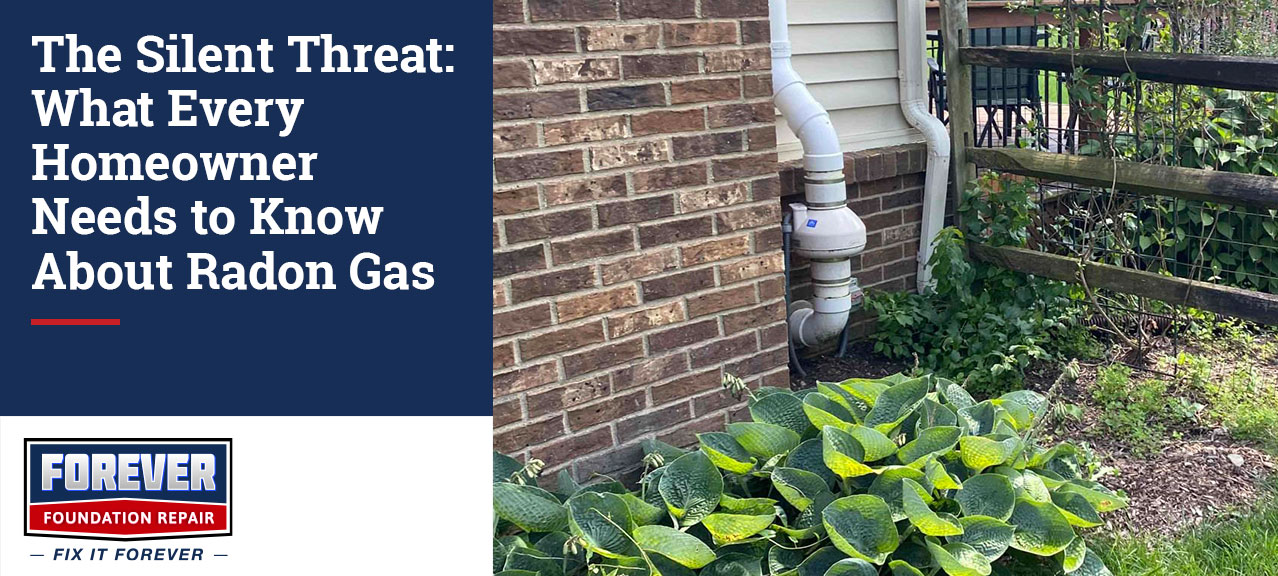
Sub-slab depressurization is the most reliable radon reduction method available. The system creates negative pressure beneath your foundation, pulling radon through PVC pipes and venting it above the roofline—away from your living space entirely. A professionally installed system can reduce radon levels by up to 99%. At Forever Foundation Repair, our team combines foundation sealing with proven mitigation solutions to keep your home safe, dry, and structurally sound for your family.
Protect Your Home with Professional Foundation Solutions
Radon does not wait for a convenient time to become a problem. Foundation cracks, unsealed crawl spaces, and open sump pits are working against your family’s health right now—quietly, invisibly, every day. Sealing those vulnerabilities and pairing that work with professional mitigation systems is the most effective way to keep radon out of your living space for the long term.
At Forever Foundation Repair, our foundation sealing and radon mitigation systems are built specifically for the challenges Northwest Ohio and Northeast Indiana homeowners face. We understand what the soil beneath your home is doing, and we know how to stop it from threatening your family’s health.
Contact us today for a no obligation, custom inspection and repair quote.