
Sagging floors, bouncing subfloors, and sticking doors are not flooring problems—they are structural warnings. For homeowners across Northwest Ohio and Northeast Indiana, these symptoms point to something far more serious lurking below your living space: termite damage and wood rot destroying your crawl space floor joists. Research shows up to 83% of crawl spaces display signs of existing or developing structural problems.
At Forever Foundation Repair, we understand how our region’s clay soils, high water tables, and humid climate fuel moisture-driven wood rot and invite subterranean termite colonies straight into your floor framing. These two threats work together to hollow out and weaken the joists that carry the entire load of your home. Our solution combines precision structural jacking crawl space techniques with heavy-duty steel jack posts to safely lift sagging floors back to level—protecting your family and keeping your home structurally sound for years to come.
How Termites and Wood Rot Destroy Crawl Space Joists
Floor joists carry the entire structural load of your home, transferring weight from your living spaces down to the foundation piers and perimeter walls. When these wood members weaken or fail, structural damage spreads throughout your entire home—not just the subfloor above.
Wood Rot: The Moisture-Fueled Threat
Wood-destroying fungus feeds on the cellulose fibers inside your floor joists, support beams, and sill plates. Wood rot crawl space floor joist repair becomes necessary when wood moisture content reaches 19% or above. Once fungal spores take hold in damp wood, they spread rapidly and break down the fibers that give lumber its load-bearing strength.
Local weather creates three primary moisture sources in regional crawl spaces:
- Capillary action: Soil moisture rising continuously from damp dirt floors.
- Groundwater intrusion: High water tables and heavy rains causing localized standing water.
- Humid air intake: Unsealed vents pulling warm, humid summer air over cooler wood framing.
Without proper moisture management, these sources push wood moisture levels past the point where decay begins. The fungus breaks down structural density from within, leaving joists cracked, brittle, and unable to carry the loads they were designed for.
Termite Damage in Crawl Space Floor Joists
Subterranean termites cause billions in property damage across the Midwest every year. These insects build mud tubes up from subterranean colonies to reach wood framing, attacking your floor joists from the bottom while leaving a thin outer shell intact—making the damage nearly invisible until it becomes severe.
Termites consume wood from the inside out, hollowing structural members while surfaces appear completely normal. Crawl spaces with poor ventilation and unsealed dirt floors create ideal conditions for Eastern subterranean colonies. Termites work silently within your floor framing for months or years before clear symptoms show up in your living space.
How Moisture Attracts Both Problems at Once
High humidity creates the perfect environment for termites while simultaneously triggering fungal growth. The two threats accelerate each other’s destruction: termite galleries trap additional moisture inside compromised wood, which speeds up rot progression, while fungal decay softens wood fibers, making lumber easier for insects to penetrate.
Signs of Termite Damage in Floor Joists & Crawl Space Framing
Catching structural damage early protects your family’s safety and keeps repair costs manageable. The warning signs show up both inside your living areas and within the crawl space below.
Interior Warning Signs: Sagging Floors Above Crawl Space
Your floors tell you when something is wrong below:
- Bouncy or springy floors: Joists flex more than they should under normal foot traffic.
- Soft spots: Walking across certain areas feels spongy or squishy.
- Uneven sloping: Floors dip, especially toward the center of rooms where joist spans are longest.
- Baseboard gaps: Sagging subfloors pull away from interior walls.
- Sticking doors and windows: Door frames warp out of square as support beams drop.
- Drywall cracks: Fractures appear near door frames and wall corners on the main floor.
- Hardwood floor distortion: You notice cupping, buckling, or squeaking when you repair sagging hardwood floors above crawl spaces.
Crawl Space Structural Indicators You Can See
A direct inspection of your crawl space reveals the extent of the damage:
- Visible fungal growth: White, yellow, dark staining, or fuzzy buildup on floor joists and beams.
- The screwdriver test: Pressing a screwdriver into a joist causes the wood to compress, break, or crumble easily under light pressure.
- Mud tubes: Tunnels running up foundation piers or wood framing point to active subterranean termite colonies.
- Hollow sound: Tapping on a joist produces a hollow echo, indicating termites have consumed the interior material.
- Failing props: Wooden 4x4s or temporary posts leaning, cracking, or sinking into the soil.
Why DIY Fixes and Band-Aid Solutions Fail
Quick fixes are tempting when floors start sagging, but temporary props ignore structural engineering principles—and cost homeowners far more in the long run.
Temporary Wooden Posts Sink and Rot in Damp Soil
Wooden 4×4 posts and unanchored concrete blocks placed directly on damp crawl space soil offer zero long-term stability. The posts absorb moisture from the ground and air, triggering the same fungal decay that damaged your original joists. These makeshift supports rot from the bottom up while sinking into uncompacted earth, causing floors to sag again within months.
Sistering Joists vs. Structural Jacking: Why Sequence Matters
“Sistering” means attaching new lumber alongside damaged joists using bolts or nails. Nailing a fresh board to a sagged joist without lifting it first locks your floor in its compromised position—reinforcing the sag rather than correcting it. Knowing how to fix rotted floor joists in a crawl space requires lifting the framing back to level before any sistering or structural reinforcement takes place.
Ignoring Root Causes Guarantees Repeat Damage
Replacing damaged timber without eliminating moisture intrusion and pest colonies guarantees identical damage will return. Treating symptoms while ignoring root causes turns every project into a temporary band-aid.
The Forever Foundation Repair Solution: Structural Jacking & Floor Leveling
Fixing sagging floors requires engineered steel support systems, precision lifting techniques, and comprehensive environmental controls. Here is how to level sagging floor joists permanently:
[1. Structural Audit] ➔ [2. Concrete Footings] ➔ [3. Steel Jack Installation]
│
[6. Encapsulation] [5. Sistering/Beams] [4. Hydraulic Lifting]
Step 1: Comprehensive Structural Inspection
We assess floor joist conditions, weight loads, soil composition, moisture levels, and structural load distribution to determine the exact placement and capacity of support posts needed.
Step 2: Site Preparation & Concrete Footings
We excavate unstable topsoil beneath support points and pour engineered concrete footings below the soil line. This creates a solid base that distributes structural weight across stable earth without risk of sinking.
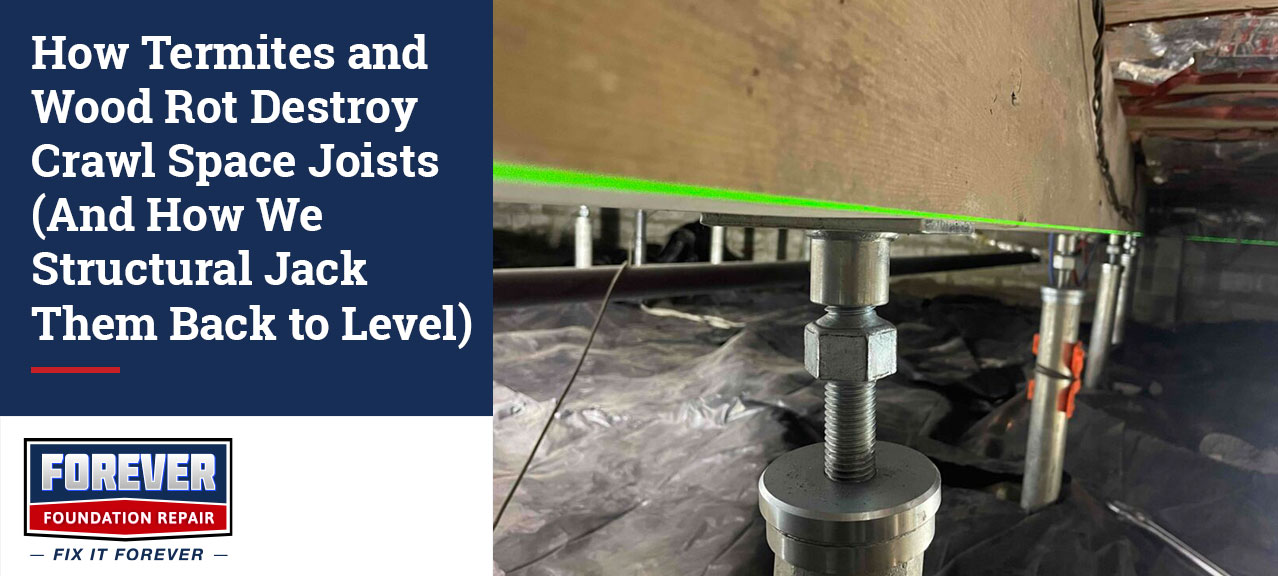
Step 3: Installing Heavy-Duty Steel Crawl Space Jacks
We install high-capacity, galvanized crawl space jack posts for floor leveling. Rated to support tens of thousands of pounds per post, these corrosion-resistant steel systems withstand high-humidity environments indefinitely.
Step 4: Precision Hydraulic Lifting
Using specialized hydraulic equipment, our team makes slow, controlled adjustments to gradually raise sagging beams and joists back toward their original level position without cracking interior drywall, tile, or plaster.
Step 5: Joist Repair, Sistering, and Beam Replacement
Once the framing reaches proper elevation, we sister new pressure-treated lumber or engineered LVL beams alongside compromised joists, replacing severely deteriorated timber sections completely.
Step 6: Long-Term Environmental Protection
We eliminate the moisture that triggered the decay by installing a heavy-duty vapor barrier or complete crawl space encapsulation system alongside specialized dehumidification. This permanently protects your framing from future wood rot and termite attraction.
Protect Your Home’s Foundation Today
Bouncing floors, sticking doors, and dips in your hardwood are clear signals that termites or wood rot have compromised your crawl space framing. Temporary props and quick fixes will not solve a structural problem—engineered steel jack posts, precision hydraulic lifting, and permanent moisture control will.
At Forever Foundation Repair, we specialize in foundation repair and floor leveling across Ohio and crawl space structural repair in Northwest Ohio and Northeast Indiana. Don’t wait for structural damage to spread.
Contact Forever Foundation Repair today for a no-obligation, custom crawl space inspection and repair quote!