
At Forever Foundation Repair, we understand that many Northwest Ohio and Northeast Indiana homeowners are confused about crawl space ventilation. While traditional building practices advocated for open vents, modern building science tells a different story.
For years, builders believed crawl spaces needed outside ventilation to prevent moisture problems. However, our experience serving homes across Toledo, Defiance, Sidney, and beyond has shown this approach often causes more harm than good.
Open vents allow humid outside air to enter your crawl space, leading to mold growth, wood rot, and structural damage. Your home becomes vulnerable to outdoor pollutants, temperature fluctuations, and pest invasions—all made worse by vented crawl spaces.
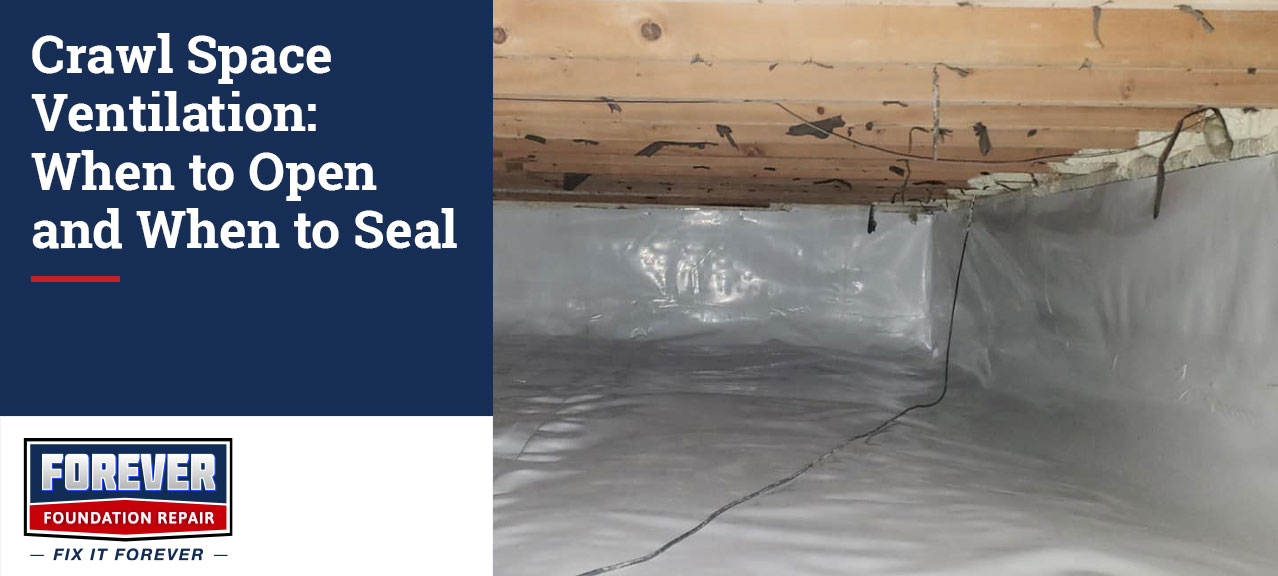
Our crawl space encapsulation experts have witnessed the transformation firsthand. Closed vents significantly reduce moisture entry and prevent wood deterioration. Sealing these openings also improves your home’s energy efficiency year-round.
What Are Crawl Space Vents?
Crawl space vents are rectangular openings in foundation walls, typically covered with metal or plastic grilles. These openings, which became standard in 1940s and 1950s construction, were designed to let outside air flow beneath living spaces.
Why They Were Originally Added to Homes
When builders began fully enclosing foundation spaces, ventilation seemed logical. The solution was simple: install foundation vents around the house “to allow the home to breathe.”
Here’s the biggest misconception: vents were meant to remove moisture but often do the opposite, especially in humid Northwest Ohio and Northeast Indiana climates.
Many believe building codes require vented crawl spaces. While historically true, modern building science shows sealed crawl spaces perform better for moisture control and energy efficiency.
Ventilation alone can’t prevent moisture problems. Proper vapor barriers, insulation, and dehumidifiers are essential for effective moisture management. Your home needs a comprehensive solution tailored to local conditions.
When Did Crawl Space Ventilation Change?
The shift in crawl space ventilation practices happened rapidly in the early 2000s, after decades of following unvalidated guidelines. These original venting requirements traced back to January 1942, when the Federal Housing Administration first published them.
Building Codes Finally Caught Up
Traditional codes mandated vented crawl spaces with foundation vents. As building science advanced, the International Residential Code began allowing unvented, conditioned crawl spaces in 2004, provided they included proper ground cover, perimeter wall insulation, and conditioning systems.
Science Proved What We Suspected
Research in humid climates like ours showed vented crawl spaces worsened moisture problems. Studies found outdoor air typically contained more moisture than crawl space air. Advanced Energy’s research revealed properly closed crawl spaces reduced energy consumption by 15% compared to vented construction.
Ohio Homeowners Need Climate-Smart Solutions
Open vents actually invite moisture inside rather than removing it. When warm outdoor air enters through these vents and contacts cooler crawl space surfaces, it creates condensation that promotes mold, wood decay, and metal corrosion.
The data is clear: vented crawl spaces maintain over 70% humidity, while sealed spaces stay below this critical threshold. This matters because mold and wood rot thrive above 70% humidity. To prevent fungal growth and structural damage, wood moisture content must remain under 17%.
Energy Savings and Comfort
Vented crawl spaces force your HVAC system to work harder. Outside air constantly entering through vents creates temperature fluctuations your system must correct. Sealing typically reduces energy costs by 10-20%.
You’ll notice improved comfort immediately – no more cold floors in winter or excessive summer humidity. Ductwork performs better in conditioned spaces versus vented ones.
Pest Control and Structural Protection
Vents provide easy access for pests like rodents, snakes, and insects. Once inside, they cause extensive damage – torn insulation reduces efficiency, chewed wiring creates fire hazards, and droppings promote mold growth. Carpenter ants and termites silently destroy wood structures.
Sealing eliminates these entry points while solving moisture issues and improving energy performance – protecting your home on multiple levels.
Dedicated dehumidifiers maintain optimal moisture levels in sealed crawl spaces, extracting up to 100 pints daily and automatically keeping humidity under 50%. This mechanical control prevents mold growth and improves indoor air quality, since nearly half your home’s air originates below.
Insulation and temperature regulation
Foundation wall insulation paired with proper sealing stabilizes temperatures beneath your home. Rigid foam panels on foundation walls create effective thermal barriers, reducing energy costs 15-25% while optimizing HVAC performance year-round.
Stack effect and indoor air impact
The natural stack effect pulls air upward through your home. Unsealed crawl spaces allow this airflow to carry contaminants into living spaces. Proper encapsulation prevents this, protecting your indoor air quality.
Conclusion
Research clearly shows sealed crawl spaces outperform traditional venting. We’ve helped countless Northwest Ohio and Northeast Indiana homeowners make this vital upgrade with excellent results.
Complete crawl space encapsulation with vapor barriers, insulation and dehumidification creates an ideal environment that protects your foundation while improving comfort and efficiency. Trust Forever Foundation Repair’s expertise to safeguard your home with proven solutions tailored to our region’s unique challenges.
Contact us today for a free inspection and customized recommendation to protect your home.