Are radon levels higher in winter? Yes — and significantly so. Northwest Ohio and Northeast Indiana homeowners face a hidden seasonal danger most never see coming. While frozen pipes and heating bills demand your attention, your furnace is quietly creating a powerful vacuum effect that pulls toxic radon gas through foundation cracks and straight into your living space. This is the stack effect — and when it combines with winter weather and foundation vulnerabilities, radon levels climb fast.
More than 21,000 people die from radon-induced lung cancer every year. Understanding why radon levels increase in winter is essential for protecting your family. The good news is that foundation sealing and professional mitigation are your most effective defenses against winter radon exposure — and Forever Foundation Repair has the expertise to get it done right.
What Is the Stack Effect and How Does It Work?
How warm air rises and creates negative pressure
Stack effect — also called chimney effect — happens when warm indoor air rises and escapes through openings at the top of your home. Warmer air is less dense than cold air, so it naturally ascends and exits through attic vents, ceiling penetrations, and upper-level gaps. That upward movement reduces air pressure at the base of your home, creating a vacuum that pulls replacement air in through any available ground-level opening.
Your basement takes the hardest hit. Cold outdoor air cannot fill the void fast enough, so the home draws replacement air from beneath the foundation. Radon gas follows that path of least resistance — moving through concrete cracks, plumbing penetrations, sump pits, floor drains, and crawl spaces.
Why the temperature difference matters in winter
The bigger the temperature gap between indoors and outdoors, the stronger the stack effect gets. Northwest Ohio winters regularly push that contrast to 60 or even 80 degrees F, which significantly amplifies the suction pulling soil gas into your basement. A home heated to 70 degrees in January generates far stronger upward airflow than the same home in April.
Stack effect produces roughly 4 pascals of pressure per story of height during cold weather. To put that in perspective — when skyscrapers were first built, revolving doors had to be invented because regular doors couldn’t be pushed open against stack effect pressure. That same force is working on your foundation every time the furnace runs.
How frozen ground and snow cover trap radon gas
Snow and frozen ground act like a seal over the soil. Under normal conditions, radon escapes from the earth and disperses into open air. Frozen ground blocks that natural release, forcing radon to move sideways toward the unfrozen soil beneath your foundation — where stack effect pulls it directly inside.
The role of heating systems in accelerating the stack effect
Your furnace doesn’t just heat your home — it deepens the radon problem. Combustion appliances that vent outdoors pull indoor air out of the house, adding negative pressure on top of what stack effect already creates. Ductwork leaks in unconditioned spaces make it worse, pulling more soil gas into living areas. The colder the temperature outside, the harder your heating system works — and the stronger the suction drawing radon through foundation openings.
How Foundation Vulnerabilities Fuel Winter Radon Spikes
Stack effect creates the suction. Foundation vulnerabilities provide the pathway. Winter radon spikes and foundation repair are directly connected — because every structural opening in your foundation turns negative pressure into a direct pipeline for soil gas entry.
Cracks in Basement Floors and Walls
Foundation cracks develop from settling, temperature changes, and environmental factors over time. These openings give radon a direct route into your living space. Even hairline fractures in concrete allow gas passage, and the perimeter joint where slabs meet walls creates additional entry points. Winter makes this worse because stack effect actively pulls radon through these cracks under continuous suction — there is no off switch while your furnace is running.
Crawl Spaces With Exposed Dirt Floors
Crawl spaces with dirt or gravel floors act as open windows for radon entry. The exposed ground provides uninhibited gas pathways, and radon moves upward through floorboards into your living areas. Homes with crawl spaces consistently register elevated radon levels because stack effect and ground gas entry work together. Northwest Ohio’s wet soil conditions make this problem even more pronounced.
Uncovered Sump Pits and Floor Drains
An uncovered sump pit creates an open hole connecting soil directly to indoor air. Without airtight covers, soil gas pressure pushes radon freely into your basement. Sump pump operation draws additional radon from soil into the pit and releases it into your living space. Floor drains without proper traps function the same way — unsealed pathways that stack effect exploits.
Gaps at Floor-to-Wall Joints
Cove joints, where poured concrete slabs meet foundation walls, often contain gaps as large as 1/4 inch. These expansion joints rarely achieve airtight seals during construction, creating continuous channels for radon infiltration along the entire basement perimeter.
Plumbing Penetrations and Utility Openings
Loose-fitting pipe penetrations and inadequately sealed plumbing entries are significant radon entry points. Gaps around water lines, utility cables, and service pipes give stack effect a direct path to draw soil gas inside. Unsealed plumbing penetrations through basement floors and walls provide multiple access routes — and most homeowners never think to check them.
Why Winter Is the Critical Time to Test for Radon
Testing under worst-case closed-building conditions
Winter is the most accurate time to test your home for radon — and the reason is straightforward. During cold months, homes naturally operate under closed-building conditions, meaning windows and exterior doors stay shut except for normal entry and exit. Testing guidelines require this state for at least 12 hours before a test begins and throughout the entire measurement period. These conditions trap radon indoors and produce readings that reflect the highest realistic exposure level your family faces.
Summer tests frequently return falsely low readings. Open windows and increased airflow dilute radon concentrations, creating a misleading picture of safety. A home that tests clean in July can easily exceed hazardous thresholds come January. Basing your mitigation strategy on cold-weather readings ensures any system installed can handle maximum loads year-round — not just the best-case scenario.
Short-term vs continuous monitoring during heating season
Short-term tests run between 2 and 90 days under closed-building conditions. Long-term measurements cover a minimum of 91 days up to a full year, and these do not require closed-building restrictions to produce reliable results. Continuous radon monitoring gives the most complete picture, tracking level fluctuations caused by weather patterns, atmospheric pressure shifts, and seasonal changes over time.
Testing through the full heating season captures peak radon exposure that a single summer test will miss entirely. Radon levels fluctuate significantly depending on conditions, and relying on one test at one point in time leaves your family’s safety to chance.
Understanding EPA action levels and winter spikes
The EPA recommends fixing your home when radon reaches 4 pCi/L or higher[191]. The agency also recommends considering mitigation for levels between 2 pCi/L and 4 pCi/L[191]. For context, the average indoor radon level in American homes sits around 1.3 pCi/L, while outdoor air averages just 0.4 pCi/L. A summer reading of 2 to 3 pCi/L can spike well above the 4 pCi/L action threshold once winter heating intensifies stack effect pressure — putting your family at risk without any visible warning signs.
Stopping Stack Effect Radon: Foundation Sealing and Mitigation
Knowing the problem is only half the battle. Stopping stack effect radon from entering your Northwest Ohio or Northeast Indiana home requires a multi-layered approach — crack repair, pit sealing, and active soil depressurization working together.
Sealing Cracks With Epoxy or Urethane Injection
Polyurethane injection is the preferred method for sealing foundation cracks. The expanding foam fills the entire crack depth while maintaining flexibility as walls shift. Urethane expands up to 35 times its original volume and adheres to wet concrete, making it ideal for basement waterproofing. Epoxy provides structural strength but lacks that same flexibility, which matters when foundations move with the seasons.
Installing Airtight Sump Pump Covers
An open sump pit is essentially a direct vent from your soil to your indoor air. Specialized sump covers with secure gaskets and ports for discharge pipes prevent radon from escaping the basin while allowing normal pump operation. Without an airtight cover, soil gases bypass mitigation systems entirely by disrupting negative pressure beneath the slab.
Crawl Space Encapsulation With Vapor Barriers
Exposed dirt floors in crawl spaces are open invitations for ground gas migration. Heavy-duty vapor barriers with a minimum 6-mil thickness seal those floors completely, stopping radon before it reaches your living areas. The barrier must be sealed to walls, foundation piers, and all penetrations using tape or spray foam. Sub-membrane suction then draws radon from beneath the barrier before it ever enters your home.
Active Sub-Slab Depressurization Systems
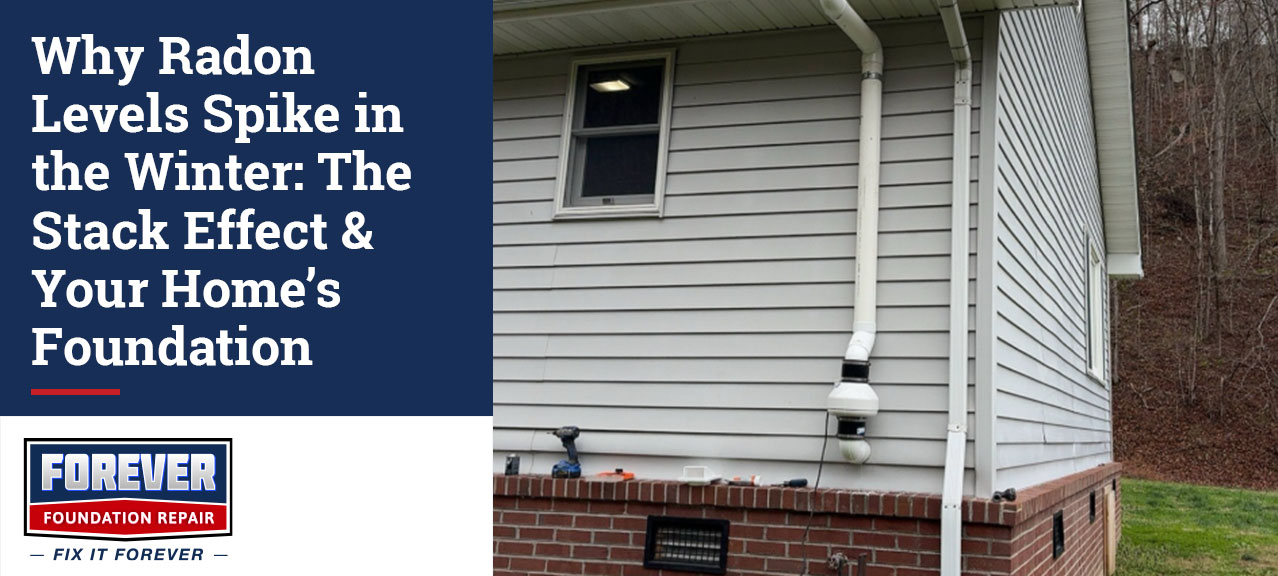
Sub-slab depressurization creates continuous suction beneath your foundation, pulling radon away before stack effect draws it inside. This system reduces indoor radon levels by up to 99% and remains the gold standard solution for homes where winter heating drives radon through foundation cracks. Suction pipes pass through the slab into the crushed rock below, connecting to an exterior fan that vents gases safely above the roofline.
Why Professional Installation Matters for Winter Conditions
Frozen ground makes drilling significantly more difficult, requiring specialized equipment and heating techniques to soften the soil. Professional contractors use adhesives specifically designed to bond at cold temperatures, ensuring airtight seals even in winter conditions. Sealing alone does not lower radon levels significantly, but when paired with active depressurization, it makes the entire system more effective and cost-efficient.
Radon problems are not a do-it-yourself project — especially in winter. Contact Forever Foundation Repair today for a no obligation, custom basement inspection, foundation sealing, and professional radon mitigation solutions tailored for Northwest Ohio and Northeast Indiana homes.